Top 90° Peel Strength Tester Suppliers for Global Buyers?
Choosing a reliable 90° Peel Strength Tester requires more than comparing prices, photographs, or advertised load ranges. Global buyers need evidence that each supplier understands real laboratory conditions. A practical evaluation should examine fixture alignment, peel-angle control, crosshead speed, load-cell capacity, software stability, and calibration traceability. Even a small angular error can distort results when testing thin films, labels, tapes, or laminated packaging. The operator should also inspect how easily the specimen can be clamped without wrinkles. Small details matter.
Dr. Steven Abbott, an adhesion-science specialist, has stated, “Adhesion is not a property of a material; it is a property of an interface.” This principle explains why supplier selection cannot rely on instrument specifications alone. A capable manufacturer should provide clear test-method guidance, repeatability data, installation support, and responsive technical service. Buyers should request demonstrations using materials similar to their own products. A glossy brochure is not enough.
This guide reviews leading 90° Peel Strength Tester suppliers for international purchasers. It considers equipment design, compliance documentation, customization, after-sales support, delivery capability, and total ownership cost. Some suppliers perform strongly in automation but offer limited local service. Others provide flexible engineering but weaker software documentation. That difference deserves attention. No ranking can replace a controlled trial with your actual adhesive system, substrate, and testing speed. A careful buyer may still discover unexpected variation after installation. That is not failure; it is useful evidence. Reliable decisions come from transparent specifications, verified performance, and honest recognition of testing limitations.
What Is a 90° Peel Strength Tester?
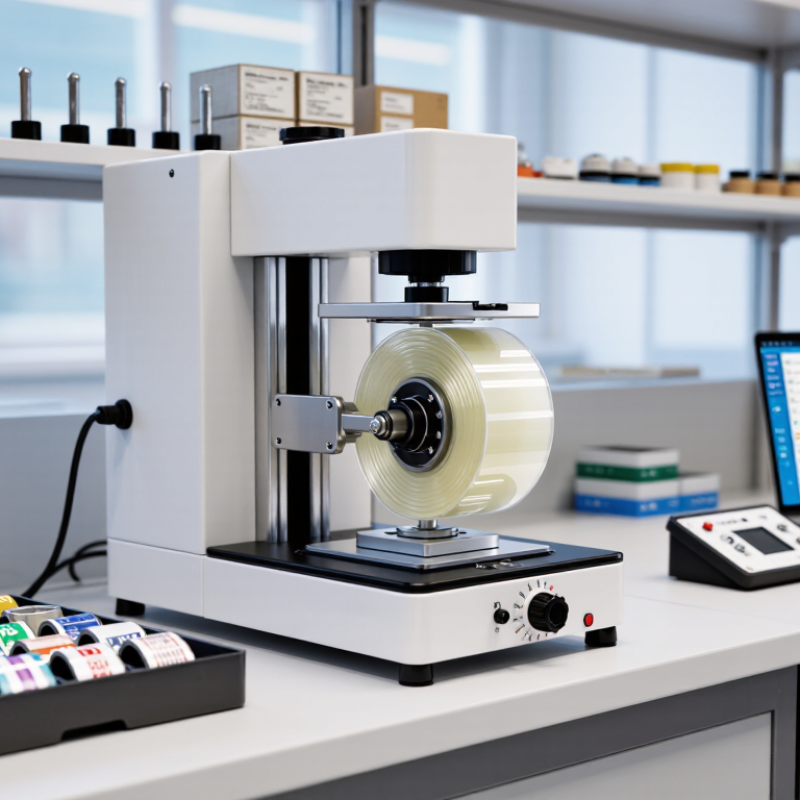
A 90° peel strength tester measures the force required to separate a flexible material from a bonded surface at a controlled right angle. The equipment usually includes a motorized test stand, load cell, peeling fixture, and data system. The sample is attached to a rigid plate, while the free backing moves upward at a defined speed. The instrument records force throughout the peel.
In practical testing, technicians use it for labels, tapes, films, laminates, medical dressings, and protective materials. Sample width, peel angle, speed, temperature, and dwell time can change the result. Even a small wrinkle may create an unstable force curve.
I have seen operators focus only on the highest peak, although the average peel force often gives more useful production information. The test surface must remain clean and level.
Calibration should be checked with traceable weights or an approved verification method. Operators should also inspect the grip alignment before each test. If the backing stretches, the reading may describe backing deformation rather than adhesive performance. That distinction is easy to miss.
A reliable tester should provide stable motion, suitable force resolution, clear data export, and repeatable clamping. Yet equipment alone cannot repair poor sample preparation. Human judgment remains important, especially when results look unusually smooth or unexpectedly variable.
How 90° Peel Testing Works
A 90° peel test measures the force needed to separate flexible material from a rigid surface at a right angle. One end of the sample is attached to a moving grip. The other end remains fixed. A load cell records force while the crosshead moves at a controlled speed. The machine usually reports average peel force, not only the highest spike. Technicians cut specimens to a consistent width and condition them under controlled temperature and humidity. This matters because adhesive flow changes with heat, moisture, and contact time. Results may appear as N/25 mm or N/inch. Units matter.
Real tests are rarely perfect. A slight wrinkle, uneven bonding pressure, or poor alignment can change the peeling angle. The fixture should hold the substrate firmly while keeping the flexible strip straight. Operators normally ignore the unstable starting section and evaluate the steady peeling region. Calibration checks, specimen width, test speed, and conditioning time should appear in every report. I would not trust one strip alone. Repeated specimens reveal variation and possible handling errors. That is where practical judgment becomes important. A supplier serving global buyers should provide traceable calibration records, clear software settings, replacement fixture details, and training guidance. The instrument is only part of the result. The preparation process often decides whether the number is useful.
Key Features to Compare Among Suppliers
When comparing 90° peel strength tester suppliers, start with measurement control, not brochure language. A reliable system should hold the peel angle at 90 degrees during the full test. Check load-cell capacity, force resolution, travel speed range, and sampling rate. Small differences matter when testing thin films, labels, tapes, or laminated packaging. Ask for calibration certificates and traceable reference standards. Good suppliers explain uncertainty, not just accuracy. That detail shows technical maturity.
Examine the fixture design closely. The clamp should grip the backing without crushing it, while the peel roller stays aligned. Look for adjustable specimen widths, quick-change fixtures, emergency stops, and guarded moving parts. Software should display force-distance curves, peak force, average force, and failure location. Exportable data is essential for audits and repeat testing. Request a live demonstration using material similar to yours. Screenshots can hide awkward workflows.
Supplier support often separates a useful instrument from an expensive obstruction. Compare installation guidance, operator training, response times, spare-part availability, and maintenance plans. Ask how firmware updates affect saved methods and whether the system supports local units and reporting formats. Verify environmental limits, electrical requirements, warranty terms, and service coverage before purchase. I would also request sample results from multiple runs. One attractive result proves little. Repeatability is the harder truth. A lower-cost option may work if its limitations are documented and accepted by your quality team.
Top Supplier Selection Criteria for Global Buyers
Selecting a 90° peel strength tester requires more than comparing prices. A dependable supplier should show traceable calibration, stable mechanics, and documented software control. ASTM D3330 defines common peel-test practices, including specimen preparation, peel angle, and force reporting. Ask whether the instrument supports your film, tape, label, or coated substrate range. Small fixture differences can change results. That matters.
Supplier evidence should include calibration records linked to ISO/IEC 17025 laboratories, repeatability data, and a clear uncertainty statement. Request raw force curves, not only a single average value. Experienced laboratories also check speed accuracy, load-cell capacity, alignment, and emergency-stop performance before purchase. A factory acceptance test with three repeated specimens can expose drift early. Ask for service response times, spare-part availability, training hours, and remote diagnostics. Cheap support becomes expensive downtime.
Market context can guide capacity decisions. Smithers’ flexible-packaging market analysis forecasts the global market to approach US$300 billion by 2028, increasing pressure for consistent seal and laminate testing. This does not mean every buyer needs a premium system. A smaller converter may value simple operation and fast verification, while a global laboratory needs multilingual records, audit trails, and method locking. Compare at least three suppliers using identical specimens. Review their data carefully. Some published repeatability claims omit operator variation, which is a weakness worth questioning. Select the supplier that explains limitations openly, not the one promising perfect results.