Top 10 Solvent Free Lamination Machine Manufacturers
Choosing among the Top 10 Solvent Free Lamination Machine Manufacturers requires more than comparing catalog prices. It demands practical knowledge of films, adhesives, curing behavior, web tension, and production targets. A machine may appear impressive in a showroom, yet perform differently beside a high-speed slitter.
Antonio Cerciello, founder of Nordmeccanica, has described the direction clearly: “The future of lamination is solventless.” His statement reflects a major industry shift toward cleaner production, lower energy consumption, and reduced solvent handling. Solvent Free Lamination can support these goals, but it is not a magic solution. Operators still need accurate adhesive metering, stable nip pressure, controlled temperature, and disciplined quality checks.
This guide examines ten influential manufacturers through practical criteria. These include machine speed, coating accuracy, substrate compatibility, automation, curing systems, maintenance access, and after-sales support. Real production details matter. A reliable line should handle delicate films without wrinkles, maintain consistent bond strength, and reduce waste during startup.
Performance depends on more than the machine.
Adhesive selection matters. So does operator training.
Some manufacturers offer advanced digital controls and remote diagnostics. Others provide simpler systems that may suit smaller converters better. No ranking is perfectly objective, because factory conditions vary widely. A flexible package-film producer may value speed, while a specialty label converter may prioritize precision and quick changeovers.
The manufacturers discussed here represent different approaches to Solvent Free Lamination technology. Their strengths, limitations, and applications deserve careful comparison before investment.
What Solvent-Free Lamination Machines Are and How They Work
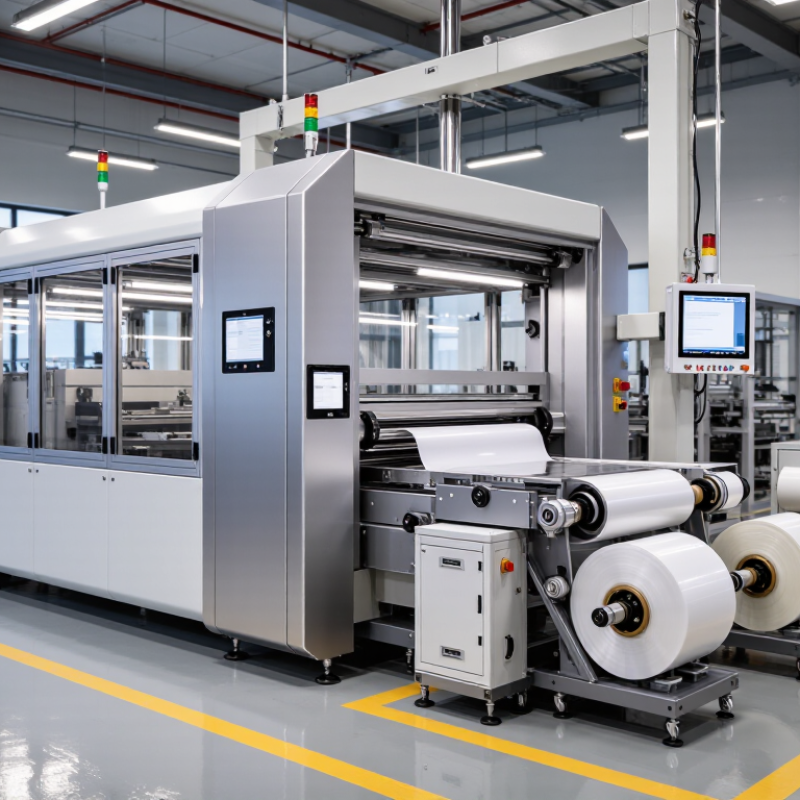
Solvent-free lamination machines bond flexible materials without evaporating liquid solvents. They commonly use two reactive adhesive components, mixed in precise ratios before coating. The adhesive contains nearly all bonding solids, so there is no drying oven for solvent removal. This can reduce energy use and workplace emissions, although it does not remove every production concern.
The machine unwinds two webs, such as film, foil, or paper, while controlling tension. A metering roller applies a thin adhesive layer, often only a few grams per square meter. A static mixer must distribute both components evenly. Then, heated or unheated rollers bring the webs together through a laminating nip. Pressure removes air pockets and creates intimate contact. Small adjustments matter.
Operators usually monitor adhesive temperature, mix ratio, coating weight, web alignment, and nip pressure. A slight ratio error may cause weak bonding, surface tack, or poor curing. After lamination, the web often needs controlled time to reach its final bond strength. Cure speed depends on adhesive chemistry, temperature, humidity, and substrate structure. In practical production, a clean splice and stable tension can matter as much as machine speed. The process looks simple from outside, but its reliability depends on disciplined measurement. I would not treat “solvent-free” as automatically perfect; incorrect settings can still create waste, defects, and delayed quality problems.
Key Criteria for Evaluating Manufacturers and Machine Performance
Top 10 Solvent Free Lamination Machine Manufacturers
Evaluating solvent-free lamination manufacturers requires more than comparing machine prices. Check coating accuracy, curing stability, line speed, and technical support. MarketsandMarkets estimates the solvent-free adhesives market will grow from about USD 1.1 billion in 2023 to USD 1.8 billion by 2028. This growth increases pressure on converters to select dependable equipment.
Review each manufacturer’s field experience with films, foils, and paper structures. Ask for trial data using your actual adhesive and substrate combination. Important figures include coating-weight variation, web tension control, energy use, and waste during startup. PMMI packaging reports consistently identify efficiency, automation, and reduced material waste as major investment priorities. A machine that runs quickly but creates wrinkles is not efficient. Not really.
Inspect the control system closely. Does it record temperature, pressure, speed, and adhesive ratio in real time? Can operators trace production data months later? Request references from facilities with similar widths and output targets. TUV or ISO-certified quality systems can support reliability, but certificates cannot replace a factory acceptance test. My own evaluation checklist would also include spare-parts availability, remote diagnostics, cleaning time, and operator training. I would still leave room for doubt; laboratory results often look better than production-floor behavior.
Tips: Test at low and high speeds. Measure peel strength after full curing. Calculate total ownership cost, not only the purchase price. Ask how failed batches are investigated.
Top 10 Solvent Free Lamination Machine Manufacturers - Key Criteria for Evaluating Manufacturers and Machine Performance
| Rank | Anonymous Manufacturer Profile | Typical Working Width | Maximum Mechanical Speed | Practical Production Speed | Adhesive Coating Range | Suitable Web Materials | Coating Accuracy | Tension Control | Energy-Saving Features | Recommended Application | Evaluation Score |
|---|---|---|---|---|---|---|---|---|---|---|---|
| 1 | Profile A — high-speed flexible packaging system | 1,000–1,600 mm | 450–600 m/min | 300–450 m/min | 0.8–2.5 g/m² | PET, BOPP, CPP, PE, PA, aluminum foil | ±0.1 g/m² | Automatic closed-loop | Regenerative drives; low-temperature curing | Large-volume food and industrial packaging | 9.4/10 |
| 2 | Profile B — modular multi-layer lamination system | 800–1,500 mm | 400–550 m/min | 280–420 m/min | 1.0–3.0 g/m² | Film, foil, paper, metallized film | ±0.15 g/m² | Automatic multi-zone | Servo motors; optimized heated-roll insulation | High-barrier and recyclable laminate structures | 9.1/10 |
| 3 | Profile C — precision coating and narrow-web platform | 600–1,300 mm | 350–500 m/min | 220–380 m/min | 0.7–2.2 g/m² | PET, BOPP, paper, coated films | ±0.1 g/m² | Closed-loop with load cells | Low-inertia rollers; standby power management | Labels, medical packaging, and short production runs | 8.9/10 |
| 4 | Profile D — heavy-duty industrial laminator | 1,200–2,000 mm | 300–450 m/min | 200–350 m/min | 1.5–4.0 g/m² | Foil, PET, PA, woven and coated substrates | ±0.2 g/m² | Automatic zone control | Efficient thermal-oil circulation; variable-speed drives | Technical textiles and durable industrial laminates | 8.7/10 |
| 5 | Profile E — flexible packaging conversion line | 800–1,300 mm | 300–450 m/min | 180–320 m/min | 1.0–3.5 g/m² | PE, PET, BOPP, CPP, PA, paper | ±0.2 g/m² | Automatic unwind and rewind control | Efficient servo control; reduced compressed-air use | General-purpose pouches and sachet production | 8.5/10 |
| 6 | Profile F — compact flexible-film laminator | 600–1,200 mm | 250–400 m/min | 150–280 m/min | 1.0–3.0 g/m² | Film, foil, paper, and metallized film | ±0.25 g/m² | Semi-automatic to automatic | Compact heating zones; efficient idle mode | Small and medium converters with varied orders | 8.2/10 |
| 7 | Profile G — paper and film combination laminator | 800–1,400 mm | 250–350 m/min | 150–250 m/min | 1.5–4.0 g/m² | Paper, PET, BOPP, PE, and foil | ±0.25 g/m² | Automatic with pneumatic loading | Heat recovery; low-power control cabinet | Paper-based packaging and promotional materials | 8.0/10 |
| 8 | Profile H — entry-level solvent-free production line | 600–1,000 mm | 200–300 m/min | 100–200 m/min | 1.5–4.0 g/m² | PET, BOPP, PE, paper, and foil | ±0.3 g/m² | Basic automatic control | Low installed heating capacity; simple drive system | Start-up operations and moderate production volumes | 7.7/10 |
| 9 | Profile I — specialty film and foil laminator | 600–1,200 mm | 200–350 m/min | 120–230 m/min | 0.8–3.5 g/m² | Aluminum foil, metallized film, PET, PA | ±0.25 g/m² | Closed-loop tension monitoring | Efficient roller heating; programmable shutdown | High-barrier, pharmaceutical, and specialty packaging | 7.6/10 |
| 10 | Profile J — customized application-focused system | 500–1,500 mm | 180–300 m/min | 100–200 m/min | 1.0–5.0 g/m² | Film, paper, foil, nonwoven, and specialty webs | ±0.35 g/m² | Application-dependent | Variable-frequency drives; configurable heating zones | Customized, low-volume, and specialty converting projects | 7.4/10 |
Benchmark note: Values are representative industry ranges for solvent-free lamination equipment. Actual performance depends on adhesive chemistry, substrate structure, web tension, curing conditions, operator settings, and product specifications.
Profiles of the Top 10 Solvent-Free Lamination Machine Manufacturers
The top ten solvent-free lamination machine manufacturers reflect different strengths in engineering and production support. One focuses on compact machines for flexible packaging plants. Another develops wide-web systems for high-volume film conversion. A third specializes in precise adhesive dosing and stable coating weight. One manufacturer is known for modular drying and curing controls. Another supplies energy-saving systems with low-temperature operation. A sixth designs machines for aluminum foil, paper, and delicate films. One emphasizes rapid roll changes and reduced setup time. Another builds inspection systems that detect wrinkles, bubbles, and coating gaps. A ninth combines automation with recipe storage for repeatable production. The tenth serves smaller converters with practical, upgradeable equipment.
Real-world performance depends on more than catalog speed. Experienced operators usually examine tension control, mixing accuracy, curing consistency, and cleaning access. A machine may promise high output, yet poor web alignment can create expensive waste. That detail is easy to overlook. Reliable manufacturers provide factory testing, application trials, spare parts, and clear maintenance instructions. Technical teams should also verify adhesive compatibility before ordering. Film thickness, line speed, and ambient temperature can change the result.
These manufacturer profiles are not equal in every category. Some offer stronger customization, while others provide faster installation or simpler controls. Field feedback matters, but it can be incomplete. Buyers should request sample laminates, inspect defect rates, and compare energy data under similar conditions. A careful assessment often reveals the best fit, rather than the most impressive specification.
Comparison of Technologies, Applications, and Production Capabilities
Comparing the top 10 solvent-free lamination machine manufacturers requires more than reading speed claims. Their systems typically use two-component polyurethane adhesives, heated coating rollers, and precise metering pumps. Some platforms include dual-station unwinding for faster roll changes. Others favor compact layouts for converters with limited floor space. In production, adhesive mixing stability often matters more than headline speed. Small ratio errors can cause weak bonds, bubbles, or delayed curing. Results vary.
For snack packaging, machines need clean coating control, low odor, and reliable tension handling on thin films. Pharmaceutical and medical packaging require tighter process records, surface cleanliness, and repeatable curing conditions. Industrial laminates may need higher nip pressure and wider web widths. Manufacturers also differ in heating strategies because solvent-free adhesives require controlled temperatures. Infrared assistance can improve flow, but it may increase film distortion risks. Trial data matters.
Production capability should include uptime, changeover time, operator training, and technical support. A fast machine is not always a productive machine. Reliable automatic splicing can reduce material waste during roll changes. Modular coating units may simplify maintenance and future upgrades. However, published output figures often reflect ideal materials and skilled operators. Real factory performance can be lower. A practical comparison should examine sample rolls, adhesive consumption, curing records, and response time for service requests before installation.
How to Choose the Right Manufacturer for Your Packaging Needs
Top 10 Solvent Free Lamination Machine Manufacturers
How to Choose the Right Manufacturer for Your Packaging Needs
Choosing among the top solvent-free lamination machine manufacturers requires more than comparing prices. Start with your packaging materials, film widths, adhesive types, and target production speed. A suitable manufacturer should explain how the machine handles your actual substrates, not only present impressive specifications.
Ask for documented test results using your films and adhesive. Request details about coating accuracy, curing performance, tension control, energy use, and waste levels. One practical lesson from production evaluations is simple: a machine may run well during a short demonstration but struggle during continuous shifts. Visit an operating facility when possible. Review maintenance records, operator training, spare-part availability, and response times. Strong technical support often matters more than a slightly lower purchase price.
Tips: Prepare sample materials before contacting manufacturers. Compare complete quotations, including installation, training, software updates, and service coverage. Check whether the supplier follows recognized quality and safety procedures. Speak with users handling similar packaging structures. Do not trust every production claim immediately. Ask how performance was measured. A small trial can reveal coating defects, uneven tension, or difficult cleaning tasks. I would also examine the control panel personally, because confusing menus can increase operator errors. The first choice may still be wrong after testing, so keep your evaluation open and evidence-based.
Article Source:
Let's Build Together
Contact Us: Call 435-563-3503
-OR- Fill in the form below and we will call you back.