7 Tips for Choosing a MCB Riveting Machine?
Selecting the right Mcb Riveting Machine can influence production speed, joint consistency, and long-term maintenance costs. A suitable machine should match your miniature circuit breaker design, terminal material, rivet dimensions, and expected daily output. Small differences matter.
In practical production, operators often inspect the riveting head, feeding system, pressure range, and adjustment method before comparing prices. The machine must hold components firmly without damaging housings or deforming contact parts. Check whether its stroke, riveting force, and tooling options fit your actual samples. Ask suppliers for test results, cycle-time data, and references from comparable electrical manufacturers. A short demonstration can reveal vibration, feeding jams, and inconsistent rivet heads that brochures may not mention.
Reliability also depends on controls, guarding, spare-part access, and after-sales support. Confirm electrical requirements and request clear documentation for installation, operation, maintenance, and workplace safety. Experienced engineers should review sample products and measure finished joints under normal production conditions. Do not trust impressive speed figures alone. Faster is not always better.
The seven tips in this guide focus on practical selection decisions, from machine compatibility and automation level to quality control and service support. Some recommendations may require adjustment because every factory has different layouts, products, and labor skills. That is worth acknowledging. A machine that performs well in one workshop may disappoint in another. Careful testing, honest supplier communication, and realistic production targets provide a more dependable foundation for investment.
Understanding MCB Riveting Machines and Their Applications
7 Tips for Choosing a MCB Riveting Machine
Understanding MCB Riveting Machines and Their Applications
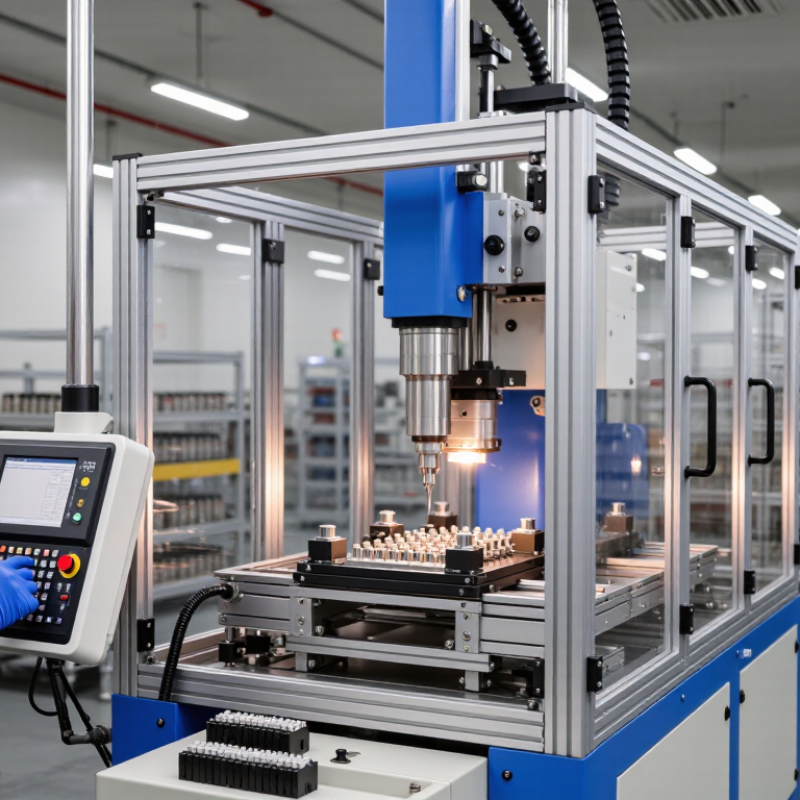
An MCB riveting machine joins internal components with controlled force, speed, and rivet depth. These components may include terminals, contact carriers, bimetal parts, and trip mechanisms. In practical production, rivet consistency affects electrical contact stability and mechanical strength. A loose joint can create resistance. Excessive force may deform delicate parts.
Start by matching the machine to your MCB design and daily output. Check compatible rivet sizes, feeding methods, tooling access, and adjustment range. Servo-driven systems often provide better control over stroke and force. Pneumatic systems can suit simpler operations, but pressure stability needs close monitoring. The best choice depends on the assembly, not impressive specifications.
Look for sensors that detect missing parts, incorrect feeding, and incomplete riveting. Force-displacement monitoring can reveal gradual tool wear before defects increase. A clear changeover process also matters when several MCB models share one line. Operators should reach the tooling safely and adjust it without guesswork. Ask for sample testing with your actual components. Laboratory results may look perfect, yet production materials can behave differently.
Keep records of rivet height, force curves, rejected units, and maintenance intervals. These records support reliable process decisions and help meet internal quality requirements. I have found that simple fixtures sometimes outperform complicated ones when operators need fast adjustments. That is not always true. Still, it deserves testing. A machine should be judged by repeatability, service access, training demands, and verified application results.
Defining Production Needs and MCB Riveting Requirements
7 Tips for Choosing a MCB Riveting Machine?
Defining Production Needs and MCB Riveting Requirements
Start with the breaker, not the machine catalogue. Record daily output, product variants, rivet material, shaft diameter, head shape, and acceptable deformation. Measure the assembly station carefully. A compact MCB may need precise force control, while a high-volume line may require automatic feeding, vision inspection, and rejection handling. The first capacity estimate is often wrong. Add realistic allowances for changeovers, maintenance, material jams, and operator breaks.
The International Energy Agency’s Electricity 2024 report forecasts global electricity demand growth of about 3.4% annually from 2024 to 2026. This growth may increase demand for reliable low-voltage protection devices. It does not justify buying the fastest riveting machine. Actual requirements depend on takt time, order mix, and quality targets. The International Federation of Robotics reported 541,302 industrial robot installations worldwide in 2023, showing the industry’s strong automation trend. Still, automation should follow a proven process.
Check riveting force consistency across several hundred sample parts. Inspect joint height, cracks, looseness, and contact alignment. Ask for recorded force-displacement curves, not only attractive cycle-time figures. Confirm whether tooling supports future rivet sizes. A machine running at 30 cycles per minute may underperform if setup takes an hour. Review noise, guarding, traceability, and electrical safety against applicable local requirements. A small pilot run can expose feeding problems that specifications miss.
Checking Compatibility, Safety Features, and Ease of Maintenance
7 Tips for Choosing a MCB Riveting Machine
Compatibility should be checked before performance. Confirm the machine’s riveting force, stroke, tooling diameter, and cycle speed against your MCB housing and terminal design. A small mismatch can create loose joints, cracked plastic, or uneven contact pressure. Ask for test samples using your actual components. Measure pull-out strength, rivet height, and electrical continuity after repeated cycles. ISO 12100 recommends risk assessment throughout machine design and operation. That principle matters on the production floor. According to the UK Health and Safety Executive’s 2023/24 report, 1.7 million workers suffered work-related ill health. Poor guarding should never be accepted as a minor purchasing issue. Check interlocked doors, emergency stops, two-hand controls, noise levels, and access to moving tooling. Some machines look safe until an operator clears a jam.
Maintenance details deserve equal attention. Choose a design with visible lubrication points, replaceable wear parts, diagnostic alerts, and simple die access. The European Agency for Safety and Health at Work has reported that maintenance-related work can represent 10–15% of fatal accidents in some European countries. That figure makes isolation procedures and lockout controls highly relevant. Require electrical documentation aligned with IEC 60204-1, plus clear spare-parts lists and service intervals. In practice, I would time a simulated die change with a technician, not only read the brochure. A checklist helps, but it can miss awkward access, confusing sensors, or dust trapped around the riveting head. Ask operators to review the design. They often notice what engineers overlook.
Comparing Suppliers, Costs, Support, and Long-Term Value
7 Tips for Choosing a MCB Riveting Machine
Choosing an MCB riveting machine starts with supplier evidence, not attractive brochures. Ask for cycle-time records, riveting-force data, and samples using your actual terminals. A stable machine should control rivet height, pressure, and alignment across repeated batches. Small deviations can create costly rework. Confirm whether the supplier follows documented quality procedures, such as ISO 9001-based controls.
Compare the full cost, not only the purchase price. Include tooling, installation, training, electricity, spare parts, and planned downtime. The International Federation of Robotics reported 541,302 industrial robots installed worldwide in 2023. This shows automation demand remains substantial, but automation is not automatically economical. Calculate cost per accepted MCB. Request a five-year ownership estimate. Then challenge the assumptions. My own buying mistake was trusting a low quotation before checking replacement tooling prices.
Support can decide long-term value. Check response times, remote diagnostic access, local technicians, and spare-part availability. Ask for a written service-level agreement. Deloitte’s 2024 Smart Manufacturing and Operations Survey found that 86% of manufacturers viewed smart manufacturing as important for competitiveness. That makes data access useful, especially when the machine records force, cycle time, and fault history. However, dashboards cannot repair poor mechanical design. Inspect the machine personally. Test changeover time between MCB models. Verify safety guarding, operator training, software updates, and integration with existing production systems. A supplier that welcomes difficult questions is usually more valuable than one offering the lowest price.
7 Tips for Choosing an MCB Riveting Machine
Suggested procurement weighting for comparing suppliers, costs, support, and long-term value
This practical evaluation model assigns a 100% decision weight across the seven factors most relevant to MCB riveting equipment. Technical fit, total cost of ownership, throughput, quality consistency, service support, safety compliance, and future scalability should be assessed together rather than by purchase price alone.