How to Choose the Right CNC Box in 2026?
Choosing the right CNC box in 2026 requires more than comparing prices and dimensions. The box must protect sensitive controls from dust, coolant, vibration, heat, and accidental impact. It should also support safe maintenance and dependable daily operation. A poorly selected enclosure can create overheating, cable damage, and costly production pauses.
This guide focuses on practical decisions used in real workshops. We will examine material strength, internal space, cooling methods, cable entry, sealing performance, and operator access. Steel may suit demanding factory floors, while aluminum can reduce weight and simplify installation. Check the IP rating carefully. It should match the working environment, not merely the product brochure. Small details matter. A sealed gland, clear viewing panel, or removable mounting plate can save hours during troubleshooting.
The correct CNC box should also fit the controller, drives, power supplies, and future upgrades. Crowded components restrict airflow and make repairs unpleasant. Leave room for heat movement and organized wiring. It is tempting to choose the smallest affordable option. That decision often ages badly. In 2026, buyers should also review thermal monitoring, energy efficiency, modular design, and compatibility with modern automation systems. However, newer features are not automatically better. Some add complexity without improving reliability.
Reliable selection depends on verified specifications, supplier documentation, and practical testing. Consider the machine’s location, duty cycle, maintenance habits, and environmental risks. No single CNC box suits every application. The best choice balances protection, usability, service life, and total operating cost. Mistakes can happen. Careful evaluation makes them less expensive.
Identify CNC Box Types and Match Capacity to Your Machine and Workflow
How to Choose the Right CNC Box in 2026?
Identify CNC Box Types and Match Capacity to Your Machine and Workflow
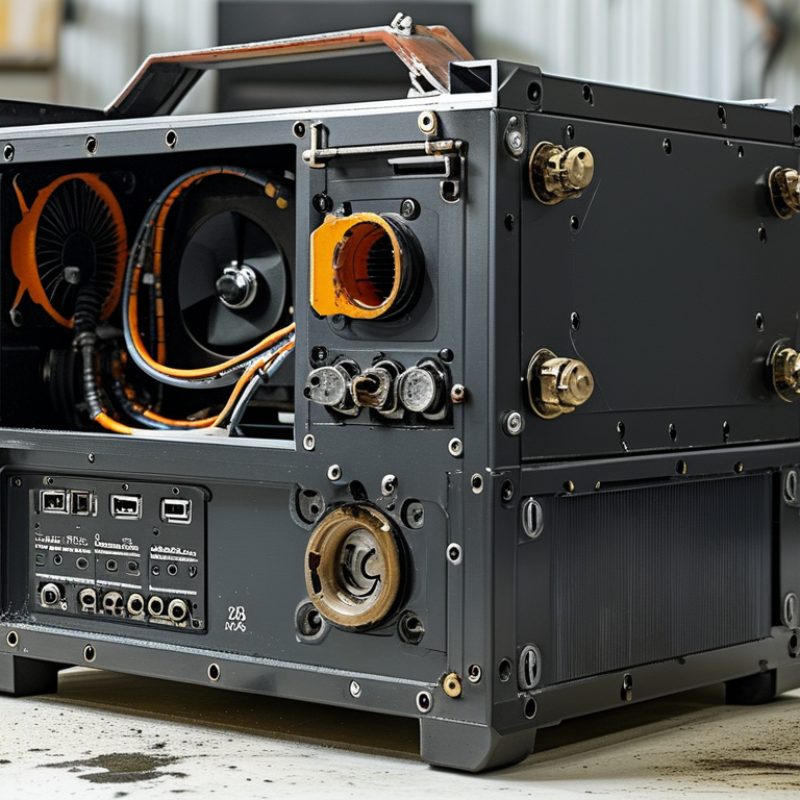
A CNC box is not always the same product. A control box houses switches, drives, and wiring. An electrical enclosure protects sensitive components from dust and coolant. A tool box stores cutters, holders, gauges, and small fixtures near the machine. Some workshops also use chip or coolant collection boxes to simplify cleaning. Identify the box type before comparing size or price.
Measure your machine and workflow carefully. Record the available floor space, mounting points, cable-entry location, and required service clearance. Then calculate the usable internal capacity, not just the outside dimensions. A box may look large but lose space to rails, dividers, insulation, or cable channels. Leave room for airflow and future components. Tight layouts create heat and make maintenance frustrating.
Think about daily movement, too. A mobile tool box needs strong casters, a stable frame, and drawers that open without hitting the machine. A fixed electrical enclosure needs suitable sealing, ventilation, and safe access for inspection. Match drawer depth to your longest tool holder. Match cable space to the bend radius recommended by the cable manufacturer. I once chose a compact box that fit perfectly, but its rear clearance was inadequate. That mistake delayed installation and forced a redesign. Measure twice. Leave some spare capacity.
How to Choose the Right CNC Box in 2026? — Identify CNC Box Types and Match Capacity to Your Machine and Workflow
| CNC Box Type | Typical Machine Fit | Typical Axis Capacity | Typical Internal Volume | Typical Heat Load | Recommended Workflow | Key Selection Criteria |
|---|---|---|---|---|---|---|
| Compact Desktop Control Box | Desktop routers, engravers, small laser systems, and educational CNC machines | 2–4 axes | 10–35 L | Up to 250 W | Light-duty prototyping, training, short production runs | Available panel space, low-voltage clearance, compact cable routing, and adequate ventilation |
| Wall-Mounted Electrical Enclosure | Small and medium milling machines, turning centers, plasma tables, and retrofit projects | 3–5 axes | 40–150 L | 250–900 W | General machining, repair work, and moderate batch production | Wall load rating, ingress protection, door swing, service access, and separation between power and signal wiring |
| Floor-Standing Control Cabinet | Large machining centers, multi-axis mills, production lathes, and automated cells | 4–6+ axes | 250–1,000 L | 900–3,000 W | Continuous production, high-power drives, coolant systems, and automated material handling | Heat dissipation, floor footprint, lifting points, internal mounting depth, and maintenance clearance |
| Modular Multi-Section Cabinet | Complex machining lines, transfer systems, robotic cells, and machines requiring future expansion | 5–9+ axes | 800–3,000+ L | 2,000–8,000+ W | High-throughput production, integrated robotics, inspection, and auxiliary systems | Sectional power distribution, expansion space, cooling zones, busbar rating, and coordinated cable entry |
| Operator Pendant or Remote Control Box | Machines requiring close visual access, manual setup, jogging, or tool-change control | Machine-dependent | 2–20 L | Up to 100 W | Setup, workholding adjustment, inspection, jogging, and emergency intervention | Ergonomics, cable flexibility, impact resistance, emergency-stop placement, and operator visibility |
| Washdown- or Dust-Resistant Box | Wet cutting, coolant-intensive machining, woodworking, stone processing, and dusty environments | 3–6 axes | 50–600 L | 250–2,000 W | Environments with coolant spray, airborne particles, frequent cleaning, or abrasive waste | Required IP rating, gasket quality, sealed cable glands, corrosion resistance, and pressure-equalization method |
| Mobile or Machine-Base Control Box | Portable CNC systems, compact production machines, and layouts that are frequently reconfigured | 2–5 axes | 40–300 L | 250–1,200 W | Flexible-cell manufacturing, job shops, demonstrations, and shared equipment areas | Vibration resistance, caster or mounting strength, bend radius, grounding continuity, and center of gravity |
Use IEC 60529 IP Ratings: IP54 Dust Protection and IP65 Water-Jet Protection
How to Choose the Right CNC Box in 2026?
CNC equipment faces dust, coolant mist, vibration, and accidental splashes. IEC 60529 IP ratings provide a practical selection method.
IP54 means limited dust ingress and protection against water splashes from every direction. It is not dust-tight. It is also not designed for direct water jets.
IP65 offers complete dust protection and resistance to low-pressure water jets. That difference matters near cutting zones and coolant lines.
According to Fortune Business Insights’ 2024 Industrial Automation Market report, the market was valued at USD 191.89 billion in 2023. It is projected to reach USD 395.09 billion by 2032. More automated workshops mean more control boxes operating around contaminants. A suitable enclosure can reduce maintenance interruptions.
However, the rating does not cover everything. IEC 60529 does not measure impact strength, corrosion resistance, temperature, or chemical compatibility.
Inspect the installation area before choosing. A dry control cabinet may only need IP54. A box beside a coolant nozzle may require IP65.
Check door seals, cable glands, mounting joints, and ventilation accessories. One weak entry point can undermine the entire enclosure.
I have seen teams specify IP65 everywhere, even where IP54 was adequate. That choice increased cost without improving protection. It deserves another review.
Also confirm the enclosure’s material against oil, coolant, and cleaning chemicals.
Calculate Box Size, Heat Load, and Airflow from Motors, Drives, and Duty Cycles
How to Choose the Right CNC Box in 2026?
Calculate cabinet size from the actual layout, not only from component dimensions. Measure drives, terminals, breakers, and control devices. Then add wiring bend radius and service clearance. Leave space around heat-producing parts. A crowded box may pass inspection, yet become difficult to repair.
Estimate heat load from real operating data. Add drive losses, power-supply losses, braking resistors, and other internal sources. Do not treat motor nameplate power as cabinet heat automatically. Motors often sit outside the enclosure. Use datasheet loss values when available. For variable duty cycles, calculate average heat: multiply each load by its operating time, then add the results. Peak heat still matters.
Airflow depends on total watts and the allowable temperature rise. In imperial units, a useful estimate is CFM = 3.16 × watts ÷ temperature rise in °F. For example, 600 watts with a 20°F rise needs about 95 CFM. Filters, louvers, and altitude reduce real airflow. Check fan curves, not just advertised ratings. This estimate is imperfect. Dust buildup, summer heat, and blocked vents can change the result quickly. Verify the design with temperature sensors during continuous cutting and repeated acceleration cycles. Five minutes of testing is not enough.
Control Noise, Chips, and Fire Risk: OSHA’s 90 dBA and NFPA 79 Checks
How to Choose the Right CNC Box in 2026?
A CNC box should control more than flying chips. It must also reduce noise, contain coolant, and limit fire exposure. During selection, measure sound at the operator’s ear, not against the enclosure wall. OSHA identifies 90 dBA as the permissible eight-hour exposure limit, while 85 dBA triggers a hearing conservation program. A quiet-looking machine may still exceed safe levels during cutting. Test it under real load.
Chip control starts with tight doors, overlapping seams, and sloped internal surfaces. Flat ledges collect oily debris. That debris can ignite if heat builds near a motor, cable, or cutting zone. Choose viewing windows that resist impact and remain clear after repeated cleaning. Small details matter. They often get missed.
NFPA 79 checks should guide the electrical design, grounding, wiring methods, overcurrent protection, and emergency-stop functions. The standard does not automatically approve every enclosure. Confirm that components suit the machine environment and installation conditions. I would also inspect cable glands and door interlocks after several production cycles. They loosen, sometimes earlier than expected. Keep a documented inspection routine, remove chips daily, and verify airflow around heat-producing equipment. A box that contains noise but traps heat may create a different hazard. Safety decisions should come from measured sound, temperature, dust, and maintenance data, not appearance alone.
Audit 2026 Compliance, Lifecycle Cost, and Support with ISO 12100
Choosing the right CNC box in 2026 starts with a documented risk assessment, not a low purchase price.
ISO 12100 requires hazard identification, risk estimation, reduction measures, and verification. It is a framework, not a certificate. Audit guarding, emergency stops, access doors, heat, dust, noise, and unexpected restart conditions.
The U.S. Bureau of Labor Statistics reported a manufacturing recordable injury rate of about 3.3 cases per 100 full-time workers in 2023. A poorly protected control box can turn a small wiring fault into production downtime or human exposure.
Lifecycle cost deserves equal attention. The U.S. Department of Energy estimates that motor systems consume roughly 70% of industrial electricity. Therefore, cooling demand, fan efficiency, standby consumption, and drive compatibility matter beyond the cabinet price.
The International Federation of Robotics recorded 541,302 industrial robot installations worldwide in 2023. More connected equipment also increases diagnostic and cybersecurity expectations.
Check asset identification, access control, backup procedures, software updates, and supplier response times. ISO 12100 will not replace electrical, EMC, machinery, or cybersecurity requirements in your market.
Ask for test records, maintenance intervals, spare-part availability, and realistic repair times. A five-year support promise sounds useful, but contract details matter more.
Some cost models will be wrong. Dust loading and operator habits change them. Recalculate after site trials, temperature measurements, and one maintenance cycle.
Evaluate the box beside the machine, where cables bend, doors open, and technicians actually work.
Article Source:
Let's Build Together
Contact Us: Call 435-563-3503
-OR- Fill in the form below and we will call you back.