How to Choose a Luxury Faucet OEM Manufacturer in 2026?
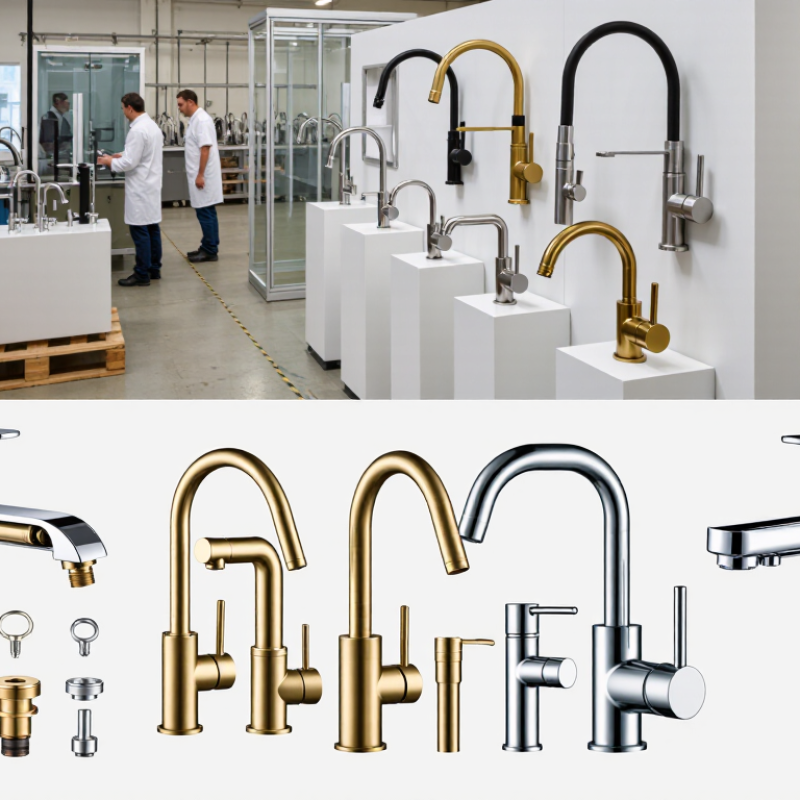
Selecting a Luxury Faucet Oem Manufacturer in 2026 requires more than comparing catalog prices. Luxury buyers expect precise finishes, reliable cartridges, and consistent water performance across every shipment. A polished showroom sample means little if the tenth production batch shows uneven plating or loose handles.
This guide explores practical ways to evaluate a manufacturer before signing a private-label agreement. Look for proven experience with brass grades, ceramic cartridges, surface treatments, and custom packaging. Ask to inspect factory records, quality checkpoints, sample approvals, and batch traceability. Request independent test reports where appropriate. Reliable manufacturers should explain their testing methods clearly, not hide behind impressive photographs.
Details matter.
A serious partner can discuss tooling tolerances, salt-spray results, leak testing, installation instructions, and replacement-part support. They should also understand applicable safety, environmental, labeling, and import requirements for your target markets. Certifications can support trust, but certificates alone do not prove daily manufacturing discipline. Verify their scope, validity, and connection to the actual products.
Communication reveals more than promises. Does the team answer technical questions directly? Can it report defects honestly? Can it manage a finish change without losing production control? These questions often separate a dependable supplier from a temporary trading company. No manufacturer is flawless. I have found that transparent correction plans are sometimes more valuable than perfect-looking sales presentations. The right partner combines engineering knowledge, documented processes, ethical business practices, and realistic delivery commitments. This approach reduces costly surprises while protecting your brand’s reputation in a competitive luxury market.
Define Luxury Faucet Specs: 1.5–1.8 GPM Flow and 0.25% Lead Limit
How to Choose a Luxury Faucet OEM Manufacturer in 2026?
Luxury faucet specifications should begin with measurable performance, not appearance. Set the flow target between 1.5 and 1.8 gallons per minute. The U.S. EPA WaterSense specification limits bathroom faucets to 1.5 GPM and kitchen faucets to 1.8 GPM. These rates support water efficiency without making daily rinsing feel weak. During factory audits, test samples at consistent pressure and temperature. A polished prototype can still fail when water pressure changes.
The 0.25% lead requirement needs precise wording. NSF/ANSI 372 defines a maximum weighted average lead content of 0.25% for wetted components. This is a material-content requirement, not a complete safety statement. Ask the OEM for current material declarations, third-party test reports, and traceable batch records. The EPA WaterSense Product Specification, Version 2.0, also supports practical flow verification. Do not accept a certificate with no model number. That mistake is common.
Tips: Request three production samples, not one showroom sample. Measure flow with a calibrated meter. Check cartridge, hose, and valve materials separately. Keep test dates in writing. Some suppliers will provide perfect paperwork but inconsistent parts. That deserves a second review.
Verify OEM Compliance with NSF/ANSI 61 and ASME A112.18.1 Standards
How to Choose a Luxury Faucet OEM Manufacturer in 2026?
A luxury faucet should protect water quality, not only impress buyers. Ask the OEM manufacturer for current NSF/ANSI 61 certification documents. This standard addresses the health effects of materials contacting drinking water. Check whether the certificate covers the exact faucet models, finishes, cartridges, and water-contact components. A general factory certificate may not cover your private-label design.
Request test reports from an accredited laboratory. Review material declarations for brass, stainless steel, elastomers, coatings, and soldered parts. Confirm that each material matches the certified production version. Also examine change-control records. A cheaper alloy or replacement seal can affect compliance without changing the faucet’s appearance. That detail is easy to miss.
ASME A112.18.1 verification is equally important. It covers plumbing supply fitting requirements, including performance, dimensions, pressure resistance, and endurance. Ask to see pressure-cycle results, flow measurements, leak tests, and installation checks. Inspect production samples, not only showroom pieces. Look for clean threads, stable handles, smooth cartridge movement, and consistent plating under bright inspection light. Traceable batch records add confidence during future quality disputes. Still, paperwork is not perfect. Certificates can be outdated, incomplete, or limited to one configuration. Require a written compliance matrix and independent sample testing before signing an OEM agreement.
Audit Factory Quality Systems: ISO 9001, 100% Leak Testing, and Traceability
How to Choose a Luxury Faucet OEM Manufacturer in 2026?
A polished showroom is not proof of factory control. Audit the manufacturer’s ISO 9001 system, certificate scope, renewal status, and corrective-action records. ISO’s 2022 Survey reported more than 1.26 million ISO 9001 certificates worldwide. That number shows adoption, not effectiveness. Ask to see how incoming brass, cartridges, seals, and surface finishes are inspected.
Demand documented 100% leak testing for every faucet, not occasional sampling. The test should record pressure, duration, fixture identity, operator, and result. A dry paper form is weak evidence. Digital records linked to serial or batch numbers are stronger. The U.S. Environmental Protection Agency reports that household leaks can waste nearly 1 trillion gallons of water annually. A small valve defect can become an expensive installation complaint.
Traceability should follow each unit from raw material to final packing. Check whether the factory can identify the casting lot, machining date, assembly line, test station, and inspector. Request a live demonstration using one packed faucet. Can staff retrieve its records within minutes? If not, the system may be decorative. Also review rejection trends, rework rates, and customer-return analysis. Perfect statistics deserve suspicion. Real factories have variation, and honest teams explain it. A missing record should trigger investigation, not a quiet spreadsheet edit.
Compare OEM Capacity, MOQ, Lead Times, and 3–5% Quality-Defect Targets
Choosing a luxury faucet OEM manufacturer in 2026 requires more than reviewing polished samples. Examine real production capacity, including casting equipment, finishing lines, assembly stations, and quality-control staff. Ask for recent monthly output and peak-season utilization. A factory operating near full capacity may miss your delivery window.
MOQ deserves equal attention. A low MOQ can support market testing, but it may increase unit costs or limit customization. Request a pilot order with clear approval samples. Then confirm whether the same tooling, materials, and surface treatment will continue into mass production. Small details matter, especially when a brushed finish must match across several batches.
Lead times should include engineering approval, tooling, raw-material purchasing, production, inspection, and shipment. A quoted 30-day lead time may exclude sample revisions. Add a realistic buffer. I have seen schedules fail there. Define the 3–5% quality-defect target precisely. Does it include scratches, leaking cartridges, color variation, or packaging damage? Use independent pre-shipment inspection and batch records. For luxury products, 3–5% should usually trigger corrective action, not automatic acceptance. Still, the target can help compare suppliers consistently. Ask for defect photos, root-cause reports, and replacement procedures. Some answers may be incomplete. That is useful information.