China Best SMT Reflow Oven Manufacturers and Suppliers?

Choosing among China’s best SMT reflow oven manufacturers and suppliers requires more than comparing prices. A reliable Smt Reflow Oven should support stable thermal performance, accurate temperature control, and repeatable soldering results. In practical production, these details matter when a board carries fine-pitch components, lead-free solder, or heat-sensitive connectors. A well-designed oven can reduce voids, uneven joints, and unnecessary rework.

Experienced buyers usually examine heating zones, cooling capacity, conveyor width, nitrogen compatibility, software functions, and maintenance access. They also request thermal profiling data, factory test records, and clear technical specifications. A supplier’s response time matters too. Small delays can become costly when production schedules are tight. Manufacturers with documented quality systems, trained engineers, and export experience often provide stronger project support. Still, certificates alone do not prove consistent performance.

Look beyond polished brochures.

Factory visits, sample testing, and reference checks can reveal practical differences between suppliers. Ask how the manufacturer handles spare parts, software updates, warranty claims, and operator training. These questions may feel routine, yet they often expose weak after-sales systems. Some suppliers offer attractive configurations but limited customization or unclear delivery terms. That risk deserves attention.

This guide introduces leading Chinese manufacturers and suppliers through a practical purchasing lens. It considers equipment capability, production experience, quality assurance, customization, and long-term service. Information should still be verified directly with each supplier. No single ranking fits every factory. Your product mix, floor space, output target, and budget will shape the right decision. Recognizing that uncertainty is part of responsible sourcing.

China Best SMT Reflow Oven Manufacturers and Suppliers?

Understanding SMT Reflow Ovens and Their Role in PCB Assembly

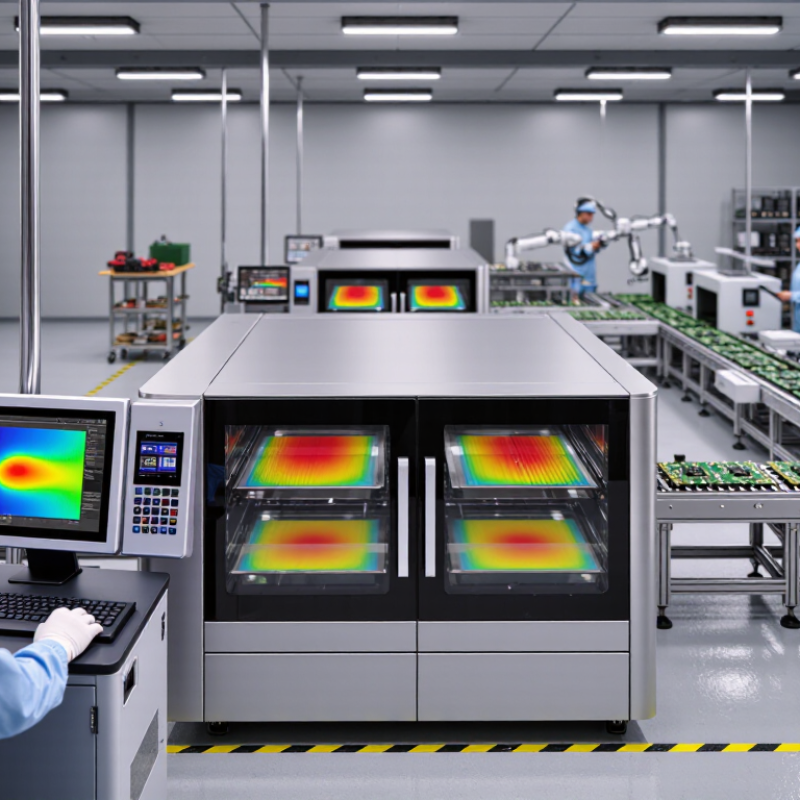
SMT reflow ovens are essential in modern PCB assembly. They melt solder paste and create reliable joints between components and circuit boards. The process usually includes preheating, soaking, reflow, and cooling zones. Each zone controls temperature, airflow, and conveyor speed. Small details matter. A stable thermal profile prevents solder bridges, tombstoning, voids, and damaged components.

In practical assembly work, engineers attach thermocouples to large and small components before production. They then compare the measured profile with the solder paste supplier’s recommended range. This step reveals cold areas, overheating, or uneven heating across the board. Nitrogen can reduce oxidation, but it is not always necessary for every product. A well-adjusted air system may be more economical for standard assemblies. The decision depends on solder alloy, board design, throughput, and quality requirements.

When evaluating SMT reflow oven manufacturers and suppliers in China, buyers should examine more than heating capacity. Ask for temperature uniformity data, profile software functions, conveyor accuracy, spare parts availability, and technician training. Factory testing should include your actual board, not only a demonstration panel. Service response also matters during production delays. A perfect thermal profile is rarely permanent. Components, board thickness, and seasonal conditions can change it, so operators need regular verification and careful records. Some suppliers promise impressive specifications, yet practical support may be less consistent. That gap deserves honest review before purchase.

Understanding SMT Reflow Ovens and Their Role in PCB Assembly

A reflow oven uses a controlled thermal profile to preheat, soak, reflow, and cool solder paste on a PCB. The representative lead-free SAC305 profile below follows commonly used process targets, including a peak temperature of approximately 235–250°C and a liquidus temperature of about 217°C.

The chart illustrates a representative lead-free reflow profile rather than data from a specific company or brand. Actual settings depend on solder paste specifications, PCB thermal mass, component limits, conveyor speed, and oven zone configuration.

Key Features to Compare When Choosing a Reflow Oven

When comparing China’s SMT reflow oven manufacturers and suppliers, start with thermal performance. Check heating and cooling zones, temperature uniformity, and profile stability across the conveyor width. A reliable oven should maintain the required soldering profile during repeated production runs. Ask for actual test records, not only brochure figures.

Conveyor width, board clearance, and maximum product weight affect daily flexibility. Confirm whether the system supports lead-free processes and different PCB assemblies. Nitrogen capability may reduce oxidation, but its gas consumption should match your production needs. Energy use also matters. A lower purchase price can become expensive through constant heating and weak insulation.

Software should provide clear profiling, alarms, recipe control, and production data export. Operators need readable screens and simple adjustments. Suppliers should explain calibration intervals, spare-part availability, training, and response times. A factory acceptance test with real boards is more useful than a polished demonstration. It reveals conveyor vibration, uneven heating, or awkward maintenance access. Extra zones do not automatically improve solder quality. That assumption deserves testing. Check service documents carefully, because vague promises often create avoidable delays.

Leading China SMT Reflow Oven Manufacturers and Suppliers

China has become a major source of SMT reflow oven manufacturers and suppliers. Leading suppliers usually provide reliable thermal profiles, stable conveyor systems, and responsive technical support. During factory evaluations, buyers should inspect heating zones, nitrogen control, and cooling performance. A well-built oven maintains consistent temperatures across the PCB width. Small deviations can still affect solder joint quality.

Experienced manufacturers often support prototype runs, mass production, and process validation. Ask for test reports, calibration records, and sample profile data. Reliable suppliers explain maintenance intervals clearly. They should also provide spare parts and remote troubleshooting. Factory experience matters, but it is not everything. Some impressive demonstrations may hide weak after-sales service. A careful buyer should request customer references and verify production capacity.

Tips: Compare actual thermal data, not only catalog specifications. Check whether the supplier can adapt rail width, heating length, and software controls. Visit the production site when possible. Watch how technicians handle alarms and profile adjustments. No checklist is perfect. Leave room for practical testing before purchase. Ask about energy use, exhaust design, operator training, warranty terms, and installation support. Clear answers usually indicate stronger engineering discipline and more dependable cooperation.

How to Evaluate Quality, Technology, and Production Capacity

China Best SMT Reflow Oven Manufacturers and Suppliers?

Evaluating an SMT reflow oven requires more than comparing prices. During factory audits, I check soldering consistency across the full conveyor width. I also inspect temperature uniformity, nitrogen control, heating zones, and cooling performance. Ask for thermal profiling records using real circuit boards. A clean brochure is not proof. Stable results matter more.

Technology should support practical production needs. Look for accurate sensors, recipe storage, automatic alarms, and easy maintenance access. Examine the heating chamber for insulation quality and airflow design. Ask how quickly the oven reaches operating temperature. Review energy consumption at normal production speed. Small details often affect daily costs. Sometimes, suppliers promise advanced control, but operators find the interface confusing.

Production capacity needs careful verification. Request factory output data, equipment lists, staffing levels, and recent delivery examples. Check whether critical parts are produced internally or outsourced. Ask about spare parts, training, and response times after installation. A supplier may have impressive capacity, yet weak technical support. That risk deserves attention.

Tips: Test several boards, not just one. Compare profiles from different zones. Visit the assembly area if possible. Speak with actual operators. Leave room for doubt. A second inspection can reveal problems missed during the first visit.

Ordering, Installation, and After-Sales Support in China

China Best SMT Reflow Oven Manufacturers and Suppliers

Ordering an SMT reflow oven in China needs more than comparing prices. Share your board size, layer count, conveyor width, solder type, and daily output. Ask for thermal profiling data, temperature uniformity, power requirements, and exhaust specifications. A reliable supplier should explain each figure clearly. Request a factory video or inspection before shipment. I once underestimated installation space, and the oven nearly blocked a maintenance walkway.

Confirm the purchase contract carefully. It should define configuration, delivery terms, acceptance testing, warranty coverage, spare parts, and response times. Factory acceptance testing can verify heating zones, conveyor stability, alarms, and profile performance. Installation should include leveling, electrical checks, ventilation connections, and operator training. Do not rush commissioning. A small conveyor offset can create uneven board movement and false process concerns.

Tips: Keep one approved thermal profile beside the machine. Record serial numbers for heaters, sensors, and motors. Ask for English manuals and wiring diagrams before delivery. During after-sales support, require remote troubleshooting procedures and clear escalation contacts. A capable technical team can guide parameter changes, maintenance schedules, and replacement-part selection. However, support quality may vary between sales promises and actual service. Test response time before full payment, and document every adjustment with dates, photos, and measured temperatures.

China Best SMT Reflow Oven Manufacturers and Suppliers? - Ordering, Installation, and After-Sales Support in China

Evaluation Dimension Typical Market Reference What to Confirm Before Ordering Installation and Acceptance Requirements After-Sales Support Indicator
Application Capacity Suitable for single-sided and double-sided PCB assembly; configuration depends on board size, component density, solder paste, and throughput. Provide maximum PCB length, width, thickness, weight, clearance requirements, and expected boards per hour. Verify the production line layout, conveyor direction, machine spacing, loading and unloading height, and board transfer compatibility. Supplier should provide operating guidance for different PCB assemblies and process recipes.
Heating-Zone Configuration Commercial SMT reflow ovens commonly use approximately 8–12 heating zones; cooling zones are normally specified separately. Confirm the exact number of heating and cooling zones, temperature-control method, zone length, and independent temperature settings. Run a thermal-profile test using an actual or representative PCB before final acceptance. Support should include recipe adjustment, temperature-profile troubleshooting, and replacement of failed control components.
Maximum Operating Temperature Many lead-free reflow systems are designed for process temperatures around 250°C–300°C, depending on the model and process design. Confirm the guaranteed operating range rather than relying only on the stated maximum temperature. Check temperature uniformity across the usable conveyor width at the required process setpoint. Supplier should provide calibration or verification procedures for thermocouples and temperature sensors.
Temperature Uniformity A commonly requested acceptance target is approximately ±2°C to ±3°C across the qualified process area, subject to the contract specification. Request the test method, measurement points, board condition, conveyor speed, and load used to calculate uniformity. Acceptance should be based on a documented thermal-profile report, not only on the machine display. Remote or on-site assistance should be available when profiles drift outside the agreed tolerance.
Conveyor Width Adjustable working widths are commonly offered for different PCB sizes; exact ranges vary by machine configuration. Confirm the minimum and maximum PCB width, edge clearance, center support, dual-rail capability, and rail adjustment method. Align the conveyor with upstream and downstream equipment and check smooth board transfer without collisions. Provide instructions for rail adjustment, chain or belt maintenance, lubrication, and alignment checks.
Conveyor Speed Typical process conveyor speeds are adjustable over a broad range, often approximately 0.3–2.0 m/min, depending on the oven design. Confirm speed accuracy, adjustment resolution, maximum board dwell time, and compatibility with the solder-paste profile. Verify actual conveyor speed with a calibrated measuring method during commissioning. Support should cover speed calibration and troubleshooting for unstable conveyor movement.
Nitrogen Capability Nitrogen-ready systems may include an enclosed chamber, nitrogen inlet, oxygen monitoring, and adjustable gas-flow controls. Confirm oxygen-level specification, nitrogen consumption, inlet pressure, connection size, alarm logic, and whether nitrogen equipment is included. Check gas leakage, oxygen readings, exhaust routing, and safe connection to the factory nitrogen supply. Supplier should provide gas-system maintenance instructions and alarm troubleshooting procedures.
Electrical and Utility Requirements Industrial reflow ovens require three-phase electrical power in many configurations; voltage and frequency depend on the installation location. Confirm rated voltage, frequency, connected load, peak power, compressed-air requirement, exhaust requirement, and plug or terminal details. Use qualified personnel to complete electrical connection, grounding, exhaust installation, and safety inspection. Electrical drawings, wiring diagrams, spare-fuse information, and troubleshooting documentation should be supplied.
Ordering Documentation A complete purchase specification normally includes machine configuration, utilities, acceptance criteria, delivery terms, packing, and training scope. Request a signed technical specification, quotation, commercial invoice or contract, delivery schedule, and spare-parts list. Define factory acceptance testing, site acceptance testing, installation boundaries, and responsibility for transportation damage. Documentation should include an operation manual, maintenance schedule, electrical drawings, parts list, and fault-code list.
Production Lead Time Standard configurations often require several weeks for manufacturing and testing; customized systems may require additional time. Confirm whether the quoted lead time begins after deposit, technical approval, or receipt of final specifications. Coordinate delivery with factory readiness, lifting access, floor loading, and line-integration dates. Supplier should provide shipment updates, packing details, installation scheduling, and commissioning coordination.
Packaging and Transportation Large reflow ovens are normally protected with industrial packaging suitable for domestic or international transport. Confirm external dimensions, gross weight, lifting points, moisture protection, shock indicators, and export documentation when applicable. Inspect the crate and machine for transport damage before unpacking and record any discrepancies with photographs. Support should assist with damage claims, missing components, and replacement-part dispatch.
Installation and Commissioning Commissioning generally includes leveling, conveyor alignment, utilities connection, heating verification, and process-profile testing. Clarify whether installation is performed by supplier personnel, a local service partner, or the buyer’s technicians. Complete dry-run testing, safety-interlock testing, heating test, conveyor test, and thermal profiling before production release. Provide operator training covering startup, shutdown, recipe management, cleaning, preventive maintenance, and emergency procedures.
Warranty Coverage A 12-month warranty from shipment, installation, or acceptance is commonly negotiated in industrial equipment contracts; the starting date must be defined. Confirm coverage for heaters, motors, sensors, controllers, software, workmanship, and excluded consumables or wear parts. Document the installation and acceptance date because it may determine the warranty period. Clarify response time, diagnosis method, labor coverage, freight responsibility, and warranty claim procedure.
Spare Parts and Consumables Common service items include thermocouples, solid-state relays, heating elements, conveyor components, filters, fans, and fuses. Request recommended two-year spare-parts quantities, part numbers, prices, availability, and interchangeability information. Keep critical spare parts on site and record serial numbers, installation dates, and replacement history. Reliable support should provide clear lead times for standard and customized replacement parts.
Maintenance Requirements Routine maintenance commonly includes chamber cleaning, flux-residue removal, conveyor inspection, sensor checks, fan inspection, and filter replacement. Ask for daily, weekly, monthly, and annual maintenance intervals, along with required tools and cleaning materials. Verify safe access to the chamber and maintenance areas, lockout procedures, and cool-down requirements. Supplier should offer preventive-maintenance guidance and technical assistance for recurring process faults.
Service Response Response times vary by service location and contract; response commitments should be stated in writing rather than assumed. Confirm support hours, communication channels, remote-diagnostic capability, language support, and escalation contacts. Record commissioning issues and unresolved items in a formal punch list with agreed completion dates. Evaluate service quality by response time, technical accuracy, parts availability, and resolution time.
Compliance and Safety The machine should be supplied with applicable electrical, mechanical, thermal, and emergency-safety documentation for the destination market. Confirm required conformity documents, safety labels, emergency-stop functions, guarding, grounding, and documentation language. Perform a site safety review before production use and verify all interlocks and emergency stops. Supplier should provide safety updates, corrective-action support, and revised documentation when modifications are made.
Total Cost of Ownership Purchase price is only one cost element; electricity, nitrogen, exhaust, maintenance, spare parts, installation, and downtime also affect total cost. Compare complete landed cost, utility consumption, service fees, spare-parts pricing, training, and optional-function charges. Confirm the cost and responsibility for unloading, positioning, connection, commissioning, and operator training. Prefer suppliers that can provide lifecycle maintenance plans and transparent service-part pricing.

Note: The numerical ranges and service terms above are typical industry reference values for specification planning, not guaranteed values for every machine. Final performance, warranty conditions, delivery schedule, utility requirements, and acceptance criteria should be confirmed in the signed technical specification and purchase contract.

Let's Build Together

Contact Us: Call 435-563-3503

-OR-  Fill in the form below and we will call you back.

Copyright © 2025CNC Fabrication. All Rights Reserved.